Clarksville Down Payment Assistance in 2026: City Program vs. THDA
First-Time Homebuyer Resources
Updated August 12, 2026 | By George Scott, REALTOR®
You may not need a 20% down payment to buy a home in Clarksville. The larger challenge is often having enough money for the down payment, closing costs, prepaid taxes and insurance, inspections, moving expenses and a reasonable emergency cushion after closing.
Two programs may help qualified Clarksville-area buyers: the City of Clarksville Down Payment Assistance Program and the Tennessee Housing Development Agency’s Great Choice Plus program.
Both can reduce the money needed at closing, but they have very different income limits, property restrictions and repayment terms. Seller-paid closing costs may provide another opportunity to reduce the buyer’s upfront expenses when they are properly negotiated and allowed by the mortgage program.
Quick answer
The City of Clarksville program advertises up to $25,000 for eligible first-time buyers purchasing within Clarksville city limits.
THDA Great Choice Plus offers up to $6,000 or $10,000 with no monthly payment, depending on the eligible product, or 5% of the purchase price up to $15,000 with a monthly payment.
Neither option is simply free money. Both require approval, documentation, homebuyer education and an eligible mortgage and property.
Does Clarksville have first-time homebuyer assistance?
Yes. The City of Clarksville First-Time Homebuyers Program provides down payment and approved closing-cost assistance to eligible low-income, first-time buyers purchasing within Clarksville city limits.
The City currently advertises assistance of up to $25,000. The actual award depends on the City’s assessment of the buyer’s need and the funding available when the application is processed. Meeting the eligibility requirements does not guarantee an award or the full $25,000.
THDA provides a separate statewide option through participating mortgage lenders. Buyers who qualify for an eligible THDA first mortgage may also qualify for Great Choice Plus down payment assistance.
Which program should you investigate first?
The City program deserves a closer look if you can answer yes to these questions:
- Are you purchasing inside Clarksville city limits?
- Do you meet the City’s first-time buyer and household-income requirements?
- Is the property below the current City sales-price limit?
- Are you comfortable with a lien and the possibility of repayment if you sell, rent, transfer or refinance the home early?
THDA may be the more likely route if:
- You are purchasing elsewhere in Montgomery County.
- Your income is above the City limit but within the applicable THDA limit.
- The home is above the City’s price cap.
- You need an eligible FHA, VA, USDA or conventional mortgage option.
- You want to compare assistance with no monthly payment against a larger option that creates a monthly payment.
City of Clarksville vs. THDA at a glance
| Feature | City of Clarksville | THDA Great Choice Plus |
|---|---|---|
| Maximum advertised assistance | Up to $25,000, based on documented need and available funding | Up to $6,000 or $10,000 with no monthly payment, or 5% up to $15,000 with payments |
| Location | Property must be inside Clarksville city limits | Available statewide through THDA-approved lenders |
| First-time buyer rule | Required; the City application asks about homeownership during the previous three years | Generally required, with certain veteran and targeted-area exceptions |
| Standard 2026 income limit | $52,550 for one person through $99,100 for eight people | Montgomery County: $98,994 for 1–2 people or $113,843 for 3 or more |
| Current home-price limit | $271,000 existing or $285,000 new construction for a one-unit home | $500,000 statewide acquisition-cost cap |
| Monthly assistance payment | No monthly payment on the City assistance | None on the $6,000 or $10,000 option; required on the 5% option |
| Homebuyer education | HUD-approved counseling required; the City says it covers the cost for approved applicants | THDA-approved homebuyer education required |
| Seller-paid closing costs | Potentially available when negotiated and permitted by the City and mortgage program | Potentially available when negotiated and permitted by THDA and the underlying mortgage program |
Funding, income limits, price caps and underwriting requirements can change. These figures reflect sources reviewed on August 12, 2026. The lender and program administrator must confirm the limits that apply to a specific buyer and property.
How the City of Clarksville’s $25,000 is structured
The City’s assistance is not one $25,000 grant. According to the City’s current Down Payment Assistance application, the maximum award is divided into two parts:
- First $15,000: A 0% interest forgivable loan. The application says this portion becomes fully forgiven after five years of continuous owner occupancy.
- Remaining $10,000: A 0% silent second mortgage with no monthly payment. This portion becomes due when the property is sold, transferred, rented or refinanced.
The City records a lien against the property. If the home stops being the borrower’s primary residence, any unforgiven or outstanding balance becomes due.
Important: The application does not describe the first $15,000 as being forgiven a little each year. It says that portion becomes fully forgiven after five continuous years. A buyer who may move or refinance before reaching five years should request a written payoff explanation before accepting the assistance.
The City application also asks for detailed income and asset records, including bank statements for adult household members, income documents, a mortgage application and a lender preapproval dated within the previous 120 days.
2026 City income limits
The City evaluates household income under federal HOME program rules. The current limits displayed for the Clarksville program are:
| Household size | Maximum annual income |
|---|---|
| 1 person | $52,550 |
| 2 people | $60,050 |
| 3 people | $67,550 |
| 4 people | $75,050 |
| 5 people | $81,100 |
| 6 people | $87,100 |
| 7 people | $93,100 |
| 8 people | $99,100 |
Do not use the table to approve or disqualify yourself. The City decides which household members, income sources and assets must be counted. If your income is close to the limit, ask how the program will calculate your household income.
The property must actually be inside Clarksville city limits
A Clarksville mailing address does not necessarily mean a property is inside the incorporated city limits.
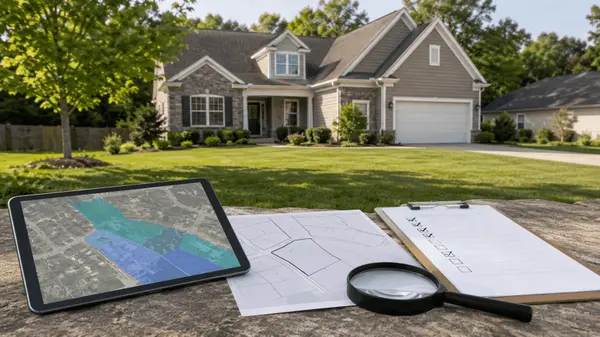
The Montgomery County Stratum parcel map can provide an initial boundary check. Before relying on City assistance in an offer, ask Clarksville Neighborhood & Community Services to confirm that the property qualifies.
The City currently directs program questions to Neighborhood & Community Services at 931-648-6133, asking for Clarissa Tucker.
How THDA Great Choice Plus works in 2026
THDA assistance must be paired with an eligible THDA first mortgage obtained through a THDA-approved lender.
Under the current THDA Originating Agents Guide, Great Choice Plus offers two primary assistance structures.
No-monthly-payment option
Eligible borrowers may receive up to $6,000 or $10,000, depending on the mortgage product and eligibility. The $10,000 option is not available with HFA Advantage.
This assistance is provided through a 0% second mortgage:
- There is no monthly payment.
- The loan is forgiven at the end of its 10-year term.
- The outstanding balance becomes due if the home is sold or refinanced before the end of the term.
No monthly payment does not mean there is no possible repayment.
Monthly-payment option
The other option provides 5% of the sales price or appraised value, whichever is lower, capped at $15,000.
This assistance:
- Is a 30-year amortizing second mortgage.
- Has the same interest rate as the THDA first mortgage.
- Requires a monthly payment.
- Counts toward the borrower’s debt-to-income ratio.
The larger upfront amount may reduce the cash needed at closing, but it can also increase the monthly housing expense. Ask the lender to compare the no-payment and payment options using the same purchase price and rate-lock date.
The current THDA guide lists a minimum 640 credit score and a maximum 45% debt-to-income ratio for Great Choice. Additional mortgage and lender requirements may apply, and meeting the program limits does not guarantee approval.
THDA increased its statewide acquisition-cost cap to $500,000 for rate locks beginning May 18, 2026, according to THDA Lender Notice 2026-14.
What assistance could mean on a $250,000 home
Suppose a buyer is purchasing a $250,000 home with a first mortgage requiring a 3.5% down payment.
$250,000 × 3.5% = $8,750 down payment
| Example | Potential effect before closing costs |
|---|---|
| No assistance | The buyer needs $8,750 for the down payment. |
| $6,000 THDA option | Approximately $2,750 of the down payment remains. |
| $10,000 THDA option | The down payment could be covered, with up to $1,250 potentially available for eligible closing or prepaid costs. |
| 5% THDA option | Assistance would equal $12,500. After the down payment, up to $3,750 could potentially be applied to eligible costs, but the buyer would have a monthly second-mortgage payment. |
| City assistance | The effect depends on the amount approved through the City’s documented-need calculation. |
| Seller-paid closing costs | A negotiated seller contribution may reduce eligible buyer closing costs, subject to the loan and program limits. |
This is an illustration, not a cash-to-close quote. It excludes closing costs, prepaid taxes and insurance, inspections, moving expenses, required reserves and other transaction-specific costs.
Can assistance and seller contributions help with closing costs?
Yes. The City says its program can assist with the down payment and approved closing costs. THDA assistance may be applied to the down payment, closing costs and eligible prepaid expenses when allowed by the mortgage.
Assistance is not the only way to reduce the buyer’s cash needed at closing. Depending on the property, market conditions and strength of the offer, I may be able to negotiate for the seller to pay an agreed portion of the buyer’s closing costs.
Seller-paid costs are negotiable, not automatic. The amount must comply with the buyer’s loan and assistance-program rules. Before writing an offer, I coordinate with the lender to determine how much the buyer can use and then structure the request around that amount.
Combining assistance with a carefully negotiated seller contribution can sometimes preserve more of the buyer’s savings for moving, repairs and emergencies after closing. However, requesting seller-paid costs can also affect how a seller evaluates an offer. Price, concessions, closing date, inspections and other terms must be considered together.
What seller-paid closing costs do not mean
A seller contribution does not automatically become cash paid directly to the buyer. It is generally applied to eligible expenses shown on the closing documents, and the lender must approve how it is used.
Buyers may still need money before closing for:
- Earnest money
- The general home inspection
- Specialized inspections
- An appraisal, depending on when the lender collects the fee
- Homebuyer education
- Moving expenses
- Immediate repairs or purchases
- An emergency reserve after closing
Ask the lender for an itemized worksheet showing the down payment, closing costs, prepaid expenses, assistance, seller contributions, lender credits and final estimated cash to close.
What if the home needs repairs?
This is one of the most frequently overlooked parts of using assistance.
The City program uses federal HOME funds, so the property must comply with applicable HOME property standards. The underlying FHA, VA, USDA or conventional mortgage may also impose property-condition requirements.
A repair-heavy house may require additional inspections, repairs or documentation. Some properties may not fit the program at all.
Before offering on a home needing repairs, ask:
- Which inspection and property standards apply?
- Must required repairs be completed before closing?
- Can the seller complete or pay for the repairs?
- Will the mortgage allow a repair escrow?
- Could an older home require additional lead-based-paint evaluation?
- Will the repair timeline fit the purchase contract?
Do not assume that a low purchase price automatically makes a house assistance-eligible.
Which program is more likely to fit?
| Property example | City program | THDA |
|---|---|---|
| $250,000 existing home inside Clarksville city limits | Potentially fits if the buyer meets the income and other program rules. | Potentially fits; 5% would equal $12,500 under the payment option. |
| $280,000 existing home inside city limits | Above the current $271,000 existing-home cap. | Potentially fits. |
| $280,000 newly constructed home inside city limits | Below the current $285,000 new-construction cap, subject to all other requirements. | Potentially fits. |
| $250,000 home outside Clarksville city limits | Does not meet the City location requirement. | Potentially fits. |
| $350,000 home in Clarksville | Above both current City one-unit price caps. | Potentially fits; 5% reaches the $15,000 assistance maximum. |
This is why a buyer relying on assistance needs more than a general “homes under $300,000” search. The search should reflect the exact program, property type, city boundary and price limit.
A note for Fort Campbell and military buyers
Eligible military and veteran buyers should ask a THDA-approved lender about Homeownership for Heroes. Current THDA guidance provides favorable first-mortgage pricing for eligible military members, veterans and certain public-service professionals. Great Choice Plus assistance may also be available with an eligible Heroes mortgage.
A veteran exception to the normal three-year first-time buyer requirement may apply under certain circumstances. Active-duty status alone should not be assumed to create every exception; the participating lender must confirm the rule that applies.
A VA loan’s possible zero-down feature also does not necessarily mean zero cash is needed. Closing costs, prepaid expenses, inspections and moving costs still have to be addressed. Assistance and negotiated seller-paid costs may help qualified buyers manage those expenses.
Can the City and THDA programs be combined?
Possibly, but do not build a buying plan around combining the programs until the structure has been confirmed in writing.
Both programs may place a subordinate lien on the property. The City, THDA, first-mortgage lender, loan insurer or guarantor and title company may all need to approve the structure.
Before writing an offer that depends on both programs, request written confirmation of:
- Whether the programs can be combined
- The order of the liens
- The total assistance amount
- The effect on the buyer’s debt-to-income ratio
- What becomes due after a sale or refinance
- Whether seller-paid costs are also permitted
- Whether the combined approval timeline will fit the contract
Eight questions to ask a participating lender
- Which City and THDA assistance options do you currently originate?
- What amount could my file actually receive? Ask for the file-specific amount, not the advertised maximum.
- Which income definition applies? Program household income and mortgage qualifying income may be calculated differently.
- What is my estimated cash to close with and without assistance?
- How much could the seller contribute under my loan? Get a lender-approved target before writing the offer.
- What is the complete monthly payment? Include both mortgages, property taxes, homeowners insurance, mortgage insurance and any HOA fee.
- What would I owe if I sold or refinanced after three, five, seven or ten years?
- What education, inspection, appraisal and funding deadlines must be completed before closing?
The Consumer Financial Protection Bureau’s Loan Estimate comparison guide can help buyers compare competing mortgage offers. A lower cash-to-close figure does not necessarily mean a lower-cost mortgage.
A practical path from renting to buying
If you are renting and wondering whether buying is possible, you do not need to begin by touring homes or making a commitment.
- Speak with a participating lender about credit, debts, monthly-payment comfort and eligible loan types.
- Contact the City if your household income, expected price and preferred location appear to fit its program.
- Request written comparisons of the assistance options.
- Complete the correct homebuyer education or counseling program.
- Keep part of your savings available for inspections, moving and emergencies.
- Search only for properties that fit your confirmed geography and price limits.
- Before making an offer, ask the lender how much seller-paid closing-cost assistance your loan can use.
You do not necessarily need to save 20% before having that conversation. Different loan programs offer different minimum down payments. The important comparison is the total monthly payment, cash needed at closing and the amount of savings you will have left afterward.
My Clarksville home-buying guide provides a broader explanation of the purchase process.
How I can help with the property and offer
The lender and program administrator determine financing eligibility. My role is to help make sure the property search and offer terms work with the financing plan.
Once we have your lender-confirmed limits, I can:
- Build separate searches for City-eligible and broader THDA-eligible homes
- Flag properties that may be outside the City boundary
- Monitor the applicable program price cap
- Discuss property-condition concerns before an offer
- Evaluate whether requesting seller-paid closing costs makes sense
- Negotiate an allowable seller contribution when possible
- Coordinate the contribution amount with the lender
- Coordinate contract dates with the lender and program administrator
- Help compare homes based on condition, location and expected ownership timeline
Seller-paid costs are never guaranteed. My job is to balance the assistance you need with the price, closing date, inspections and other terms that determine the overall strength of the offer.
Frequently asked questions
Does Clarksville offer first-time homebuyer assistance?
Yes. The City advertises up to $25,000 in down payment and approved closing-cost assistance for eligible first-time buyers purchasing within Clarksville city limits. The amount is based on documented need and available funding.
Is down payment assistance free money?
No. Both the City and THDA programs use second-mortgage or forgivable-loan structures. Repayment may be required if the home is sold, refinanced, transferred, rented or no longer used as the borrower’s primary residence before the applicable requirements are satisfied.
Can assistance cover closing costs?
Yes, when the costs are eligible under the program and mortgage. A negotiated seller contribution may also pay an allowable portion of the buyer’s closing costs, subject to lender and program limits.
Does first-time buyer mean I have never owned a home?
Not always. Many programs use a three-year lookback period. THDA also provides certain veteran and targeted-area exceptions. The City or participating lender must evaluate the buyer’s specific ownership history.
Can I use seller-paid closing costs with down payment assistance?
Potentially. The lender and assistance program must approve the structure, and the seller must agree to the contribution as part of the purchase contract. The amount cannot exceed the applicable loan and program limits.
Should I choose the program offering the most money?
Not automatically. Compare the monthly payment, interest rate, repayment triggers, property restrictions, cash needed at closing and how long you expect to own the home.
Bottom line
The City of Clarksville program may provide more assistance, but it serves a narrower group of buyers and properties. THDA reaches more income levels, locations and purchase prices, but its largest assistance option creates a monthly second-mortgage payment.
Down payment assistance is also not the only tool available. Depending on the home and market conditions, I may be able to negotiate for the seller to pay an allowable portion of the buyer’s closing costs. That can be especially useful when coordinated with the lender before the offer is written.
The best question is not simply, “Which program gives me the most money?”
It is: Which combination of financing, assistance and negotiated offer terms fits my income, monthly budget, property and expected time in the home?
If you have a lender-confirmed budget and want a property search built around the correct City or THDA limits, contact me for a Clarksville home-search and offer plan.
Sources and official program links
- City of Clarksville First-Time Homebuyers Program, accessed August 12, 2026.
- City of Clarksville Down Payment Assistance Application, dated November 2025; accessed August 12, 2026.
- THDA Great Choice Home Loan, accessed August 12, 2026.
- THDA Down Payment Assistance, accessed August 12, 2026.
- THDA Approved Lender Search, accessed August 12, 2026.
- THDA Originating Agents Guide, latest revision dated August 11, 2026; accessed August 12, 2026.
- THDA Lender Notice 2026-14: Acquisition Cost Limits.
- HUD FY 2026 Income Limits.
- HUD HOME Homeownership Value Limits.
- Federal HOME Property Standards and Inspections.
- Consumer Financial Protection Bureau Loan Estimate Comparison Guide.
This article is for general education and is not a loan approval, commitment to lend, legal opinion or tax advice. Program funding, limits, rates and guidelines can change. The City of Clarksville, THDA and participating lender determine eligibility, assistance and final loan terms. Seller contributions are negotiable, subject to the seller’s agreement and the applicable loan and program requirements.
George Scott, REALTOR®
Keller Williams Realty Clarksville
TN License #377474
Cell: (931) 385-5195 | Office: (931) 648-8500
GeorgeScott@kw.com
Categories
- All Blogs 52
- Clarksville Montgomery County Market Updates 12
- Community Events and Local News 9
- First Time Homebuyer Resources 19
- Holidays at Home 4
- Home Buying Tips 27
- Home Improvement and Maintenance 6
- Home Selling Tips 11
- Military and PCS Moves 4
- Mortgage and Financing 2
- Moving to Clarksville 5
- Neighborhood Guides 10
- Real Estate Glossary and FAQs 8
- Real Estate Investing 2
- Renter's Resources 5
- Style and Design 3
Recent Posts