Home Inspection Clarksville TN | What to Expect & What Matters
The Home Inspection in Clarksville: What to Expect and What Matters
When your offer is accepted, three separate clocks start at once — and understanding all three is what separates buyers who close with confidence from those who get surprised after moving in.
Quick Navigation: → The Three Parts of Due Diligence | → What a Home Inspection Covers | → What Inspectors Find Most in Clarksville Homes | → Cosmetic vs. Structural | → What Happens After the Report Arrives | → The Appraisal | → Title Insurance in Tennessee | → Quick Stats | → FAQ
You're Under Contract. Now Comes the Most Important Two Weeks in the Whole Process.
Your offer was accepted. Congratulations — that's real. But here's what most buyers don't fully understand until they're in the middle of it: the moment both parties sign that contract, you don't have a house yet. You have an agreement to buy a house, contingent on what the next two to three weeks reveal.
That window — the due diligence period — is where three separate processes run in parallel, each protecting a different party for a different reason:
The home inspection protects you. You order it, you pay for it, and the findings are yours to act on. It documents the physical condition of the property — what's working, what's aging, what needs attention — so you can make informed decisions and negotiate from evidence rather than hope.
The appraisal protects your lender. They order it, you pay for it as a closing cost, and it confirms the home is worth what they've agreed to finance. If the home appraises below contract price, your loan won't cover the gap.
The title search protects your ownership. A title company reviews public records to confirm the seller has the legal right to transfer the property to you — no hidden liens, unpaid taxes, undisclosed heirs, or ownership disputes that could surface after you're holding the keys.
All three happen during roughly the same window. All three can affect your path to closing. Understanding what each one does — and what your role is in each — is the difference between a smooth closing and a stressful one.
I'm George Scott, a buyer's agent with Keller Williams Realty in Clarksville. I've guided first-time buyers, Fort Campbell military families, and relocating professionals through hundreds of Montgomery County transactions. This article walks you through everything that happens during your due diligence period — starting with the process you have the most direct control over, and the one that matters most to your negotiating position: the home inspection in Clarksville, TN.
The Three-Track Due Diligence Period: A Map Before We Start {#three-tracks}
Before we get into what inspectors actually find in Clarksville homes, here's the full picture of how these three tracks work together.
Track 1: The Home Inspection (Days 1–7 After Contract)
You schedule a licensed inspector within days of the contract being executed — ideally within 48 hours. The inspection itself takes two to four hours. The report arrives within 24 hours, typically as a detailed PDF with photos. You then have the remainder of your inspection contingency window — usually 7–14 days total — to review findings, decide what to address, build a repair or credit request, and submit it to the seller.
Track 2: The Appraisal (Days 5–21 After Contract)
Your lender orders the appraisal shortly after the contract is finalized. An independent, VA- or lender-approved appraiser visits the property, evaluates it against recent comparable sales, and issues a formal value opinion. This typically takes 7–14 days. If the appraised value supports the contract price, this track closes quietly. If it comes in low, you're back at the negotiating table with different numbers. [Full appraisal and Tidewater process covered in Step 5 →]
Track 3: The Title Search (Concurrent with Inspection and Appraisal)
The title company begins its search on the property's ownership history as soon as the contract is executed. Most title searches are complete well before closing. Issues are rare — but they do happen, particularly on properties that have changed hands multiple times, carried VA loans, or have complex ownership histories. In those cases, early identification gives everyone time to resolve problems before the closing date is at risk.
📊 Did You Know? Research analyzing thousands of home inspections shows that 86% of inspections uncover at least one issue requiring attention — and buyers who negotiate based on inspection findings save an average of $14,000 off the original asking price. Amerisave The inspection is not an obstacle to buying. It's the tool that makes you a better buyer.
A few local inspectors- Finding the right professionals to evaluate your potential home is the most critical step. To help you navigate this process with confidence, I’ve compiled a list of reputable local inspection companies known for their thoroughness and expert insight.
Amerispec of Middle TN 931-410-3003 Amerispec of Middle Tennessee | Middle Tennessee, TN | Home Inspector
JW Goad Home Inspections 931-801-1575 Home | JW Goad Home Inspections
Benspection 931-305-9902 Benspection
What a Home Inspection Actually Covers {#what-covered}
A home inspection is a visual assessment of a property's major systems and structural components conducted by a licensed inspector. It is not a demolition. Not a warranty. Not a pass/fail grade. It's a professional, documented evaluation of what is accessible and observable on the day of the inspection.
Under Tennessee's Standards of Practice for licensed inspectors, the evaluation covers:
Structure and foundation — Foundation type (slab vs. crawl space), visible structural components, signs of movement, settling, or displacement.
Roof — Condition, apparent age, visible defects, flashing, gutters, drainage. Inspectors note remaining useful life where observable.
Exterior — Grading and drainage away from the foundation, siding, windows, doors, decks, walkways. Drainage away from the foundation is particularly important in Clarksville's clay-heavy soil.
Electrical — Panel type and condition, visible wiring, GFCI outlets in wet areas, smoke and carbon monoxide detectors, safety concerns.
Plumbing — Supply and drain pipes (visible), water heater age and condition, fixtures, evidence of leaks or past water damage.
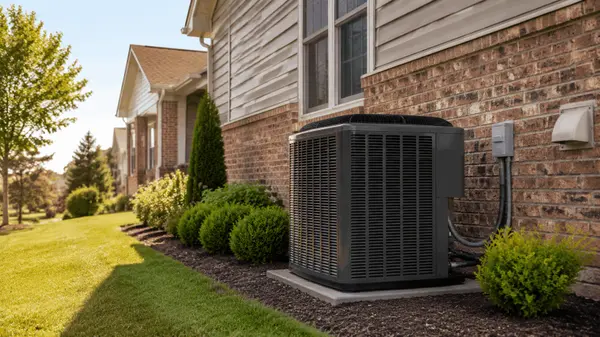
HVAC systems — Heating and cooling equipment condition and approximate age, filter condition, visible ductwork, functionality using normal controls.If selected as part of your inspection additional more in depth review can be conducted by an HVAC Professional
Insulation and ventilation — Attic insulation, crawl space vapor barriers, ventilation adequacy.
Interior — Walls, ceilings, floors, windows, doors, stairs — visible defects and functional concerns.
Other tests like Radon, Air Quality, Termite ect can also be added to most inspections but are not always already included.
The inspector does not open walls. They don't pressure-test plumbing or run electrical load tests. What they observe and document gives you a thorough, evidence-based picture of the home's condition on inspection day — and that picture is the foundation for every negotiation conversation that follows.
What Inspectors Find Most Often in Clarksville Homes {#clarksville-issues}
Clarksville's housing stock has a character that shapes inspection findings. The city built aggressively through the 1980s, 1990s, and 2000s — driven by Fort Campbell's growth and the population expansion of Montgomery County. That means a large share of current resale inventory is 20–40 years old, with systems that have aged naturally and sometimes unevenly.
Inspections in Clarksville commonly focus on grading and drainage, slab cracking, HVAC performance, roof condition, and maintenance-related issues often associated with rental or frequently-occupied homes.
HVAC Systems: The Most Consistent Finding on Mid-Range Homes
A well-maintained HVAC unit typically lasts 15–20 years. A 2003 home in north Clarksville or St. Bethlehem could easily have the original system — and an inspector noting "functional but approaching end of service life" on a 21-year-old unit is giving you real, actionable information.
This doesn't mean you shouldn't buy the home. It means you should factor replacement cost ($5,000–$10,000 for a standard unit) into your negotiation and your five-year ownership budget. HVAC age is one of the most common and most negotiable findings in Clarksville transactions.
Crawl Space Moisture: The Tennessee Reality
Tennessee's humid weather causes moisture to accumulate in crawl spaces, which can lead to mold growth and wood rot — weakening structural beams and affecting the air quality inside living spaces. TFS Clarksville's clay-heavy soil drains slowly and retains moisture against foundation walls. In homes with vented crawl space foundations — common throughout older north Clarksville neighborhoods, downtown, and parts of St. Bethlehem — moisture accumulation is not unusual. Severity varies widely.
Many homes built before 2000 in Middle Tennessee still rely on vented crawl spaces. While vents were originally intended to reduce moisture, in a humid climate like this one, they often introduce more moisture than they remove. Eleftherios Xixis
What your inspector is looking for: evidence of standing water, wood rot on floor joists, fallen or deteriorated insulation, missing or inadequate vapor barrier, and mold growth. Remediation ranges from improving the vapor barrier (a few hundred dollars) to full encapsulation (several thousand) to foundation repair (potentially significant). Understanding the severity of what's documented is critical — and a good inspector's photos and notes will make that severity clear.
Roof Condition and Age
Clarksville's weather cycles roofs hard — hot humid summers, occasional winter ice events, active spring storm seasons. A standard shingle roof's life expectancy is 20–30 years depending on material quality and maintenance history. Many homes in the 37042 and 37040 zip codes have roofs installed in the early 2000s that are at or approaching this window.
"Roof nearing end of service life" on a 22-year-old shingle roof is a maintenance observation. Active leaking, damaged flashing, and signs of water intrusion at the ceiling level are current defects that belong on your repair request.
Electrical Panels: Two Names to Know
Federal Pacific Stab-Lok panels — Found primarily in homes built between the late 1950s and mid-1980s, these panels have a documented history of breakers failing to trip during overload events. Many insurance companies won't insure homes with them or charge substantially higher premiums. If your inspector identifies a Federal Pacific panel, this is an action item, not a monitoring note.
Zinsco / GTE-Sylvania panels — Similar concerns; found in some 1970s–1980s builds in older Clarksville neighborhoods. Same guidance applies.
💡 Fun Fact: Approximately 30% of home inspections uncover electrical system issues ZipDo — the most common single category in inspection reports nationally. In Clarksville's older housing stock, that rate is consistent or higher.
Fort Campbell-Area Homes: What to Watch For
Homes near military installations often benefit from thorough inspections due to higher occupancy turnover and wear. Homeinspectionsbyspd Military families who have rented properties in the north Clarksville corridor near Gates 1–3 experience normal deferred maintenance — not from negligence, but from the practical reality of frequent moves. HVAC filters, caulking around windows and doors, minor fixture wear, and exterior maintenance items show up more consistently in these homes. None of it is disqualifying. All of it is documentable and negotiable.
— I've had buyers walk into north Clarksville homes near Gate 3 that looked rough on the surface and turned out to be in solid structural shape once the inspector got into the systems. And I've had buyers fall in love with immaculate St. Bethlehem homes where the inspector found crawl space issues that changed the negotiation entirely. The lesson is always the same: what a home looks like and what a home actually is are two different things. The inspector is the one who tells you which is which.
Cosmetic vs. Structural: The Distinction That Saves You Money and Nerves {#cosmetic-structural}
One of the most important things I do with buyers before the inspection happens is set expectations for what the report will contain — and what it won't.
A Note on Timing: When Cosmetic Repairs Get Negotiated
Here's something many buyers don't realize: cosmetic repairs and allowances belong in the initial offer — not the post-inspection request.
When we write your offer, we're looking at the home's overall condition as presented. If the carpet is worn, the paint is dated, the kitchen fixtures are tired — those are visible, known conditions at the time of offer. That's when we negotiate a flooring allowance, a paint credit, or a cosmetic update budget into the contract terms.
Once we're in the inspection window, the conversation shifts entirely. We're no longer talking about what the home looks like. We're talking about what the inspector found — systems, structure, safety. Mixing cosmetic items into a post-inspection repair request dilutes your leverage on the things that genuinely matter and signals to the seller that you're looking for a discount rather than addressing real concerns.
Cosmetic findings — appropriate for offer negotiation, not inspection requests:
- Dated flooring, worn carpet, scuffed or faded paint
- Dated fixture styles in kitchens or bathrooms
- Minor caulk gaps around windows or doors (cosmetic, not structural)
- Normal surface wear on decks, fencing, or exterior trim
Structural and mechanical findings — appropriate for post-inspection negotiation:
- Active roof leaks or evidence of water intrusion at ceiling level
- HVAC systems at or past service life, or failing to operate
- Foundation movement, significant cracking, or settling with displacement
- Crawl space moisture with evidence of rot, mold, or structural impact
- Federal Pacific or Zinsco electrical panels
- Plumbing leaks, failing water heaters, non-functional fixtures
- Missing smoke and carbon monoxide detectors
The second list is where your post-inspection negotiating energy belongs. The first list is where smart offer strategy already handled it.
🔍 The inspection window is where preparation makes the biggest difference. I read every report with my buyers — line by line — and help them build a focused, strategic response that protects their interests without killing the deal. If you're approaching this step and want to talk through what to prioritize, let's connect before you submit anything. Talk Through Your Inspection Strategy with George →
What Happens After the Inspection Report Arrives {#after-inspection}
This is the part most articles skip past. The report lands in your inbox. Now what? Here's exactly how I work through it with my buyers — and the process that turns a 25-page document into a clear negotiating plan.
Step 1: We Read It Together — and We Don't Panic
The report is long. It has photos. It uses language like "monitor for further development" and "immediate correction recommended." Some items will surprise you. That's normal — 86% of inspections find at least one issue requiring attention. A lengthy report is not a sign you found a lemon. It's a sign you have a complete picture of what you're buying.
I go through every report with my buyers, usually on a call the same day it arrives. We read through every finding together, and my first job is to help you understand which items are meaningful and which are routine maintenance observations that every home of this age and type will generate.
Step 2: We Categorize the Findings
We sort everything in the report into three buckets:
Focus items — Structural issues, mechanical failures, safety concerns, or findings with significant repair cost implications. These are the items we're going to negotiate on. Examples: aging HVAC confirmed past service life, evidence of crawl space moisture with wood rot, Federal Pacific panel, active roof leak.
Accept and budget for — Items that are real but don't rise to the level of a repair request. A 15-year-old roof with 5–7 years of life remaining. HVAC that's running but aging. Normal wear on interior finishes. These go into your five-year ownership budget, not your repair request.
Cosmetic or routine maintenance — Items the inspector flagged out of professional thoroughness that don't affect the home's value, safety, or function. A missing switchplate. A weatherstripping gap. Dated caulk around a tub. These are your responsibility as the new owner. They don't belong in the negotiation.
Step 3: We Get Contractor Estimates on Major Items
For any focus item with significant cost implications — HVAC replacement, crawl space remediation, roof repair, panel replacement — I recommend getting a contractor estimate before we submit the repair request. This transforms your request from "the inspector said the HVAC is old" to "the HVAC system is documented as past service life; licensed HVAC contractor estimate for replacement is $7,200." That's a negotiation grounded in real numbers, not general concern.
💡 Fun Fact: According to industry data, 83% of home buyers use inspection findings to ask for concessions — either a price reduction (31%) or money to cover repairs (29%). Clever Real Estate Most sellers expect some back-and-forth after the inspection. A focused, well-documented request is far more effective than a long list.
Step 4: We Choose the Right Ask — Repair, Credit, or Price Reduction
Once we know what our focus items are and what they cost, we decide how to ask:
Seller completes the repair before closing — Best for immediate safety hazards (non-functioning electrical panel, active water intrusion, missing smoke detectors) where the issue needs to be resolved for the lender to approve the loan — particularly on VA and FHA transactions with MPR requirements. The downside: you're relying on the seller to choose the contractor and supervise the work. Sellers don't have as much investment in making sure repairs are completed properly, and buyers will be waiting on the seller to get them done.
Seller credit at closing — My preferred approach in most situations. The seller gives you a dollar amount applied toward your closing costs, which frees up cash for you to hire your own contractor after closing. You control the quality, you choose the contractor, you get the warranty. A seller credit is often more appealing to buyers — it means you can choose who does the work and when. Note: your lender must approve the credit amount, so keep estimates and invoices organized.
Price reduction — Appropriate when findings significantly change the home's value proposition and both parties agree a credit structure doesn't accomplish the same thing. Less common but sometimes the cleanest resolution on major structural findings.
Step 5: We Submit a Focused, Professional Request
The repair request I submit on your behalf will include the specific findings with their report page reference, contractor estimates for each major item, a clear ask for each item (repair, credit, or both), and professional language that keeps the conversation productive.
— The worst post-inspection negotiation I've ever seen was a 22-item repair request that covered everything from a missing doorknob to deck paint. The seller shut down completely, the listing agent called it a lowball attempt disguised as a repair list, and a deal that should have closed smoothly took three more days and a lot of goodwill to salvage. The best negotiation I've been part of was four specific items, each with a contractor quote, submitted calmly and clearly. The sellers came back with a compromise the next morning. Every single time, focused beats exhaustive.
Step 6: We Resolve, Renegotiate, or Invoke the Contingency
Most post-inspection negotiations in Clarksville's current market resolve — sellers engage, a credit or partial credit is agreed upon, and both parties move forward. If the seller refuses to negotiate on genuinely material findings, we can counter, accept as-is with adjusted expectations, or invoke the inspection contingency to exit the contract and recover your earnest money — provided we're still within the contingency window. That deadline is not flexible. Managing it is part of my job.
The Appraisal: Your Lender's Due Diligence {#appraisal}
While the inspection is running, your lender is ordering the appraisal. These are frequently confused by first-time buyers, so let's be direct about the difference:
The inspection is ordered by you, paid by you (~$300–$450 in Clarksville), and protects your interests by documenting condition.
The appraisal is ordered by your lender, paid by you as a closing cost (~$400–$900 in the Clarksville area), and protects the lender's interests by confirming the home is worth what they're agreeing to finance.
Appraisers establish market value using recent comparable sales — the same methodology as the CMA your agent runs before the offer. The difference is that the appraiser's opinion is binding for lending purposes. If the appraisal comes in below the contract price, your lender won't finance more than the appraised value, and you're back at the negotiating table.
VA Appraisals and Minimum Property Requirements
For Fort Campbell buyers using VA loans, the appraisal serves two purposes: establishing value AND confirming the property meets VA Minimum Property Requirements. MPRs focus on safety, sanitation, and structural soundness — heating system function, roof condition, evidence of wood-destroying insects, accessible crawl spaces. Most MPR flags overlap directly with what your general inspection already surfaces. When a VA appraisal flags a repair requirement, it's because there's a genuine issue — not because the VA is being arbitrarily strict.
📊 Did You Know? The National Association of Realtors reports that the average home inspection costs around $400 in 2025 National Association of REALTORS — a small investment relative to the negotiating leverage, financial protection, and peace of mind it provides on a $300,000+ purchase.
Title Insurance in Tennessee: The Protection That Works Quietly in the Background {#title}
Title insurance is the least-discussed part of due diligence and — for buyers who've never needed it — the hardest to appreciate. Until you do need it.
What the Title Search Does
The title company reviews public records — deed transfers, tax records, lien filings, court judgments, easements — to confirm the seller has clear legal ownership and can transfer it to you without encumbrance. The search is thorough. But it's not infallible. Records have errors. Heirs are sometimes undisclosed. Liens are sometimes missed. Title insurance is what protects you when the search missed something.
Two Policies, Two Purposes
Owner's title insurance — Protects your property rights for as long as you, your children, or other heirs own the home. It covers forged deeds, unknown heirs, undisclosed judgments, clerical errors in public records, and identity fraud — any situation where someone later claims an ownership interest in your property.
Lender's title insurance — Required in all mortgage transactions. Protects the lender's financial interest in the property if a title defect surfaces after closing. The buyer typically pays this as a standard closing cost.
How It Works in Tennessee
Tennessee is a rate-filed state — meaning the Department of Insurance approves title insurance rates charged to all consumers. The cost is typically about 0.5% of the purchase price — a one-time fee paid at closing that covers your property for as long as you or your heirs own it. On a $304,000 Clarksville home, that's approximately $1,500.
In Tennessee, it's customary for the seller to pay the owner's title policy — though this is negotiable and specified in the purchase contract. For new construction in Clarksville, the custom can reverse — buyers more commonly pay the owner's policy on new builds.
My advice: always get the owner's policy. In the Clarksville market — where properties have sometimes changed hands multiple times under VA loans and with complex rental histories — the one-time premium is worth it. I've never in my career seen a closing where a buyer regretted having title insurance.
📊 Quick Stats: Home Inspection and Due Diligence in Clarksville TN {#stats}
- 86% of inspections find at least one issue requiring attention — a long report is normal, not alarming (Porch data, cited by AmeriSave, 2025)
- Average buyer savings from inspection-based negotiation: $14,000 off the asking price (Porch data, cited by Preferred Home Inspections)
- 83% of buyers use inspection findings to request concessions — price reductions or repair credits (HomeLight / ListWithClever, 2025)
- Title insurance cost in Tennessee: approximately 0.5% of purchase price — a one-time fee covering you and your heirs as long as you own the property (Tennessee Department of Insurance; industry practice)
- Average inspection cost in Clarksville: $300–$450 for a standard home; specialty inspections (radon, mold, WDI/termite) add $100–$250 each (NAR 2025; HomeAdvisor)
Frequently Asked Questions {#faq}
What do home inspectors look for in Clarksville TN?
Inspectors evaluate all major systems and structural components: foundation and crawl space, roof, HVAC, electrical, plumbing, insulation, and interior conditions. In Clarksville specifically, they pay close attention to crawl space moisture (Tennessee's humidity makes this a consistent issue), HVAC age on 1980s–2000s homes, roof condition on homes with 20+ year-old shingle roofs, and electrical panels — particularly Federal Pacific and Zinsco panels in older stock. They're not there to fail the home. They're documenting its actual condition so you can negotiate from evidence.
How much does a home inspection cost in Clarksville TN?
Standard home inspections in Clarksville typically run $300–$450 depending on home size and inspector experience. Specialty add-ons — radon testing, mold assessment, sewer scope, and the WDI (wood-destroying insect/termite) inspection — each add $100–$250. The WDI inspection is particularly important in Middle Tennessee and is required for VA loans. Budget $350–$500 for a complete standard inspection. It's not an expense to cut. A $400 inspection that surfaces a $12,000 crawl space issue is one of the best investments in the entire home buying process.
What happens after a home inspection?
George reviews the full report with you — usually same day it arrives — and together you categorize findings into focus items to negotiate, items to accept and budget for, and routine maintenance. For major focus items, you get contractor estimates to anchor the dollar figures. Then a focused repair-or-credit request is submitted to the seller. Most Clarksville sellers engage constructively on well-documented, focused requests. If a resolution can't be reached on material findings, you can invoke the inspection contingency within the deadline to exit and recover your earnest money. The key is having an agent who manages those timelines and shapes the strategy — not just forwards the report.
What is the difference between a home inspection and an appraisal in Clarksville?
They protect different parties for different reasons. The inspection is ordered and paid for by you — it protects your interests by documenting the property's physical condition before you commit. The appraisal is ordered by your lender and paid by you as a closing cost — it protects the lender by confirming the home is worth what they're financing. Both happen during the same 2–3 week due diligence window. Both can affect your path to closing. Neither one makes the other unnecessary.
Should I ask for cosmetic repairs in my inspection request?
No — and this distinction matters. Cosmetic repairs and allowances (flooring, paint, dated fixtures, minor wear) belong in the initial offer negotiation, not the post-inspection repair request. When we write your offer, we can build in a flooring credit, paint allowance, or cosmetic update budget based on what the home visibly needs. Once we're in the inspection window, the conversation focuses exclusively on what the inspector found: systems, structure, safety. Mixing cosmetic asks into a post-inspection request dilutes your leverage on the items that genuinely matter and signals to sellers that you're fishing for a discount rather than addressing real concerns.
Is a termite inspection required in Clarksville TN?
A general home inspection does not include a termite or wood-destroying insect (WDI) inspection — it's a separate service. In Clarksville and across Middle Tennessee, termite activity is common enough that a WDI inspection is strongly recommended for all buyers. For buyers using VA loans, it's required — the VA appraisal will not proceed without evidence of a clear WDI report. WDI inspections typically cost $75–$150 from a licensed pest control company and can be scheduled at the same time as your general inspection. Don't skip it.
The Due Diligence Period Is Your Strongest Buyer Protection — Use All of It
When your offer is accepted in Clarksville, TN, you don't just schedule a home inspection and wait. You activate three parallel tracks — the inspection to protect your interests, the appraisal to protect your lender's, and the title search to protect your ownership. Understanding all three, knowing what each one reveals, and having someone experienced in Clarksville's specific housing stock in your corner for all of it — that's what makes the difference between a closing that feels smooth and one that feels like a series of surprises.
The home inspection in Clarksville is where buyers learn what they're actually buying. The negotiation that follows is where that knowledge becomes leverage. Both of those conversations go better with a local expert who has done this hundreds of times in this market.
The due diligence period gives us the best opportunity to protect you. Let's talk through your goals and how we navigate this step together.
Contact George to Talk Through Your Due Diligence Strategy →
The best time to ask every question you have about what you're buying is before you're done buying it.
Series Navigation
⬅ Previous: Step 5 — How to Write a Winning Offer on a Clarksville Home (Without Overpaying) — How to Write a Winning Offer on a Clarksville Home (Without Overpay...
➡ Next: Step 7 — How to Close on a Home in Clarksville, TN — [URL]
📚 Read the full series: The Home Buyer's Journey — A Clarksville, TN Guide — Your Roadmap to Homeownership in Clarksville, TN - George Scott - K...
Sources & Citations
National Association of Realtors. 2025 Average Home Inspection Cost. House Beautiful / NAR, 2025. nar.realtor/newsroom
AmeriSave / Porch Data. The Ultimate Home Inspection Checklist for 2026. January 2026. amerisave.com
HomeAdvisor. How Much Do Home Inspections Cost? 2025. homeadvisor.com
Preferred Home Inspections. Home Inspection Statistics. April 2026. preferredinspectionsde.com
ZipDo. Home Inspection Statistics: ZipDo Education Reports 2025. 2025. zipdo.co/home-inspection-statistics
ListWithClever. Seller Not Willing to Negotiate After Inspection? Here's What to Do. August 2025. listwithclever.com
Redfin. How to Negotiate After the Home Inspection: What Buyers Can Ask For. September 2025. redfin.com/blog/negotiating-after-home-inspection
Raleigh Realty. 7 Tips: Negotiating Repairs After a Home Inspection. 2025. raleighrealty.com
Home Inspections by SPD. Home Inspector in Clarksville TN. 2025. homeinspectionsbyspd.com
Matt Ward Homes. Home Inspection Tips for Buyers in Clarksville. October 2025. mattwardhomes.com
Hercules Home Inspections. Understanding Moisture in Middle Tennessee Crawlspaces. November 2025. herculeshomeinspections.com
The Foundation Specialists. Why Crawl Space Inspections Are a Must for Every Tennessee Home. November 2024. thefoundationspecialists.com
Felix Homes. Who REALLY Pays for Title Insurance in Tennessee? felixhomes.com
The Tabor Team / Tyler York Real Estate. A Cheat Sheet to Title Insurance in Tennessee. February 2025. nolorealestate.com
Tennessee Title Insurance Rate Information. anytimeestimate.com/title-insurance/tennessee-title-insurance
That One Inspector. Clarksville Tennessee Home Inspections. 2025. thatoneinspector.com
Keller, Gary, Jay Papasan, and Dave Jenks. Your First Home: The Proven Path to Homeownership. McGraw-Hill, 2008.
George Scott | Keller Williams Realty | Clarksville, TN 📞 931-385-5195 | ✉️ Georgescott@kw.com | 🌐 buygeorgehomes.com Serving Clarksville, Fort Campbell, and Montgomery County
Categories
- All Blogs 54
- Clarksville Montgomery County Market Updates 14
- Community Events and Local News 9
- First Time Homebuyer Resources 19
- Holidays at Home 4
- Home Buying Tips 28
- Home Improvement and Maintenance 6
- Home Selling Tips 11
- Military and PCS Moves 4
- Mortgage and Financing 2
- Moving to Clarksville 5
- Neighborhood Guides 10
- Real Estate Glossary and FAQs 8
- Real Estate Investing 2
- Renter's Resources 5
- Style and Design 3
Recent Posts