Mortgage Rate Buydown Explained | Clarksville TN
What Is a Mortgage Rate Buydown and Does It Make Sense in Clarksville TN Right Now?
Your monthly payment isn't set in stone — and with the right negotiating move, you can lower it from the day you close without spending a dollar out of pocket.
The Move Most Buyers Never Know to Make
Picture this: you're a sergeant at Fort Campbell, you've got a 90-day window before your lease is up, and you've just found a solid four-bedroom in Sango that checks every box. Your lender sends over the rate — 7.25% — and the monthly payment is workable, but tighter than you'd like. You're this close to pulling the trigger when a little voice says: maybe wait and see if rates come down.
Here's the thing. You might not need rates to come down. You might be able to lower your payment right now — through a strategy called a mortgage rate buydown. And in a lot of cases in Clarksville's current market, the seller pays for it.
A mortgage rate buydown is one of the most underused negotiating tools available to buyers in Clarksville right now. In this article, I'll explain exactly how it works, show you the real dollar savings on a typical Clarksville home, and help you figure out whether it makes sense for your situation.
I've been working in Clarksville real estate for over a decade, helping everyone from first-time buyers to Fort Campbell veterans closing on VA loans. The buydown conversation is one I have at almost every offer now — and buyers who understand it walk away with a better deal.
What Is a Mortgage Rate Buydown?
Quick Definition
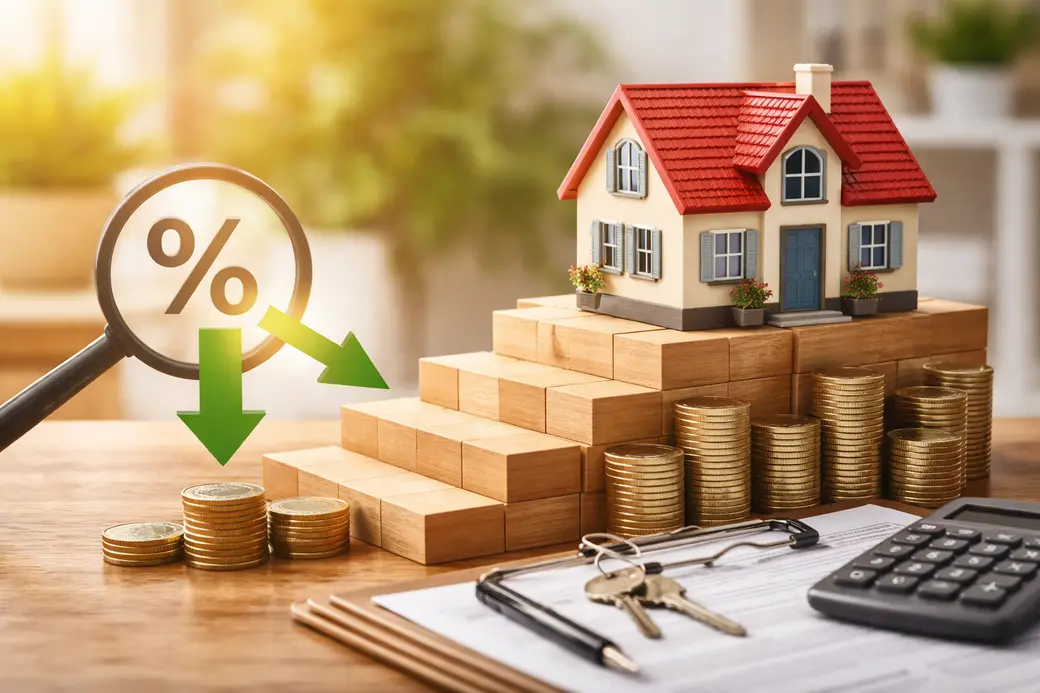
A mortgage rate buydown is when an upfront lump sum — paid by the seller, builder, or buyer — is used to reduce your interest rate. That lower rate means a lower monthly payment, either for the first few years (temporary buydown) or for the life of the loan (permanent buydown).
There are two main types, and choosing between them depends on how long you plan to stay in the home and who's funding the reduction.
Temporary Buydowns: The 2-1 Buydown
The most common structure right now is the 2-1 buydown. It works like this: your interest rate is reduced by 2 percentage points in Year 1, by 1 point in Year 2, and returns to your original note rate starting in Year 3. The funds to cover the difference are deposited by the seller into an escrow account at closing — and that money is drawn against each month to subsidize your lower payment.
There's also a 3-2-1 buydown that extends the reduced period to three years, though it costs more and is less common. For most buyers in Clarksville, the 2-1 is the sweet spot.
💡 Fun Fact
According to the Mortgage Bankers Association, 2-1 buydowns surged to become one of the most-discussed seller concession strategies nationally in 2023 as mortgage rates climbed. What was once a niche financing tool became a mainstream negotiation move.
Permanent Buydowns: Buying Points
A permanent buydown — also called "buying points" — reduces your rate for the entire life of the loan. One discount point equals 1% of the loan amount and typically reduces your rate by roughly 0.25%, though the exact reduction varies by lender and market conditions.
Permanent buydowns make financial sense when you plan to stay in the home long enough to recoup the upfront cost. The break-even math on that matters a lot — and I'll get to it.
📊 Did You Know?
According to Freddie Mac, one discount point (equal to 1% of the loan amount) typically reduces a mortgage rate by approximately 0.25 percentage points — though lenders vary. On a $299,000 loan, that's $2,990 per point. So the break-even timeline is real math, not a rough guess.
For most Clarksville buyers right now, the 2-1 temporary buydown is the stronger play — especially when the seller funds it. The break-even on permanent points typically takes 7–10 years, and with rates expected to ease, many buyers will refinance before they get there. The 2-1 gives you meaningful short-term savings at zero personal cost.
The Real Numbers: What This Looks Like on a Clarksville Home
Enough theory. Let's look at an actual Clarksville scenario. Median home prices in Clarksville are running approximately $310,000–$320,000 through 2024–2025. Let's use $315,000 with a standard 5% down payment — a $299,000 loan at a note rate of 7.25%.
| Scenario | Year 1 | Year 2 | Year 3+ | 2-Year Savings |
|---|---|---|---|---|
| No Buydown | 7.25% · $2,042/mo | 7.25% · $2,042/mo | 7.25% · $2,042/mo | — |
| 2-1 Buydown | 5.25% · $1,652/mo | 6.25% · $1,841/mo | 7.25% · $2,042/mo | ~$4,596 |
Based on $299,000 loan amount, 7.25% note rate, 30-year fixed mortgage. Payments are principal & interest only; taxes and insurance additional. Consult your lender for exact figures.
In Year 1 alone, that buyer saves $390 per month — $4,680 for the year. Over the first two years combined, total savings are approximately $4,596. The seller funds this by depositing roughly $4,600–$5,000 into a buydown escrow account at closing. After Year 2, payments step back up to the standard rate.
Here's the line I use with every buyer: that $5,000 from the seller is money you would have negotiated anyway — maybe as a price reduction. But a $5,000 price reduction saves you about $27 a month. A buydown saves you $390 a month for a full year. Same negotiation. Radically different outcome for your cash flow.
— George Scott, REALTOR® · Clarksville, TNWhat Happens When Year 3 Arrives?
Here's the honest answer to the concern every smart buyer eventually raises: in Year 3, your payment steps back up to the full rate — in this example, $2,042 per month. You need to be able to afford that payment.
There are a few ways to think about this. First, many buyers in today's environment are planning to refinance before Year 3 if rates drop — and most market forecasters expect some rate movement in that window. Second, if your household income is growing (common for military families who receive promotion-based pay increases), the stepped-up Year 3 payment may be much more manageable than it looks today. Third, if none of that applies and the full payment genuinely feels like a stretch, a buydown may not be the right tool for you — and I'll tell you that directly rather than push you into a loan that doesn't fit.
📞 Want to See Your Numbers?
Wondering what a 2-1 buydown would look like on your specific purchase price and loan amount? I'll connect you with one of my trusted lender partners — Bruce Dawson at Legacy Mortgage, Chad Winn at CrossCountry, or Connie Gillum at First Bank — and we can run your numbers in one call.
No commitment, no pressure. Call or text me at 931-385-5195 or reach out at georgescott@kw.com.
Who Pays for a Mortgage Rate Buydown?
This is the part most buyers don't know: in the majority of cases, you don't pay for it at all. The seller funds it as part of the purchase negotiation — and that changes the entire calculus.
Seller-Funded Buydowns: Why Sellers Say Yes
When a listing has been sitting for a few weeks, or when a seller has a relocation deadline, they're often willing to offer concessions rather than reduce their list price. The smart move — and the one I push for — is to structure those concessions as a buydown rather than a price cut.
Here's why sellers often prefer it: a funded buydown doesn't lower the recorded sale price, which means it doesn't drag down comps for the neighborhood. The seller isn't taking a visible price hit on paper. They're contributing a specific dollar amount to help the buyer close — and in return, they get a clean, smooth transaction instead of a stalled listing.
In Clarksville neighborhoods like Sango and West Creek, I've negotiated seller-paid 2-1 buydowns by framing it exactly this way. In practice, the seller concession is written directly into the purchase contract as a specific dollar line item — your agent handles the language, and it's accounted for at closing.
Not every seller will agree — and I won't pretend otherwise. Sellers in fast-moving price segments with multiple offers have no incentive to fund a buydown. But when you're in a market segment with slower days on market — which exists in parts of Clarksville right now — this is one of the most effective tools I have. I'd rather negotiate a buydown than chase a price reduction that accomplishes half as much.
— George Scott, REALTOR® · Clarksville, TN💡 Fun Fact
According to the National Association of Realtors' 2023 Profile of Home Buyers and Sellers, seller concessions — including rate buydowns and closing cost assistance — played a meaningful role in transactions across elevated-rate markets. Buyers in slower-moving segments are in the best position to ask.
Builder-Funded Buydowns Near Fort Campbell
If you're looking at new construction — and there's been significant development activity in the Rossview and Kenwood corridors — builders frequently offer buydowns as a marketing incentive. Some advertise a specific low payment number by funding a permanent or temporary buydown upfront.
Always compare the builder's buydown offer against what a straight price reduction would accomplish before you accept it at face value. The numbers don't always favor the buydown, and builders aren't running charity programs. Run both scenarios with your lender.
📊 Did You Know?
According to Zillow Research, new construction incentives — including mortgage rate buydowns — increased significantly through 2023 and 2024 as builders worked to offset affordability challenges. In some markets, buydown incentives are now standard in new construction contracts.
Temporary vs. Permanent: Which One Is Right for You?
When a 2-1 Temporary Buydown Makes Sense
- The seller is funding it — your out-of-pocket cost is zero
- You expect to refinance if rates drop in the next 2–3 years (a reasonable assumption in today's environment)
- Your income is growing and you can comfortably handle the Year 3 payment step-up
- You want breathing room in the early years while furnishing, settling in, and building equity
When Permanent Points Make Sense
- You plan to stay in the home for 7+ years and the break-even math confirms the investment pays off
- You have cash reserves after closing and want a permanently lower rate
- The seller or builder is offering points as part of the deal and the lender confirms the savings are real
The break-even test is simple: take the cost of the points, divide by your monthly savings. If it takes 9 years to break even and you're active duty with PCS orders every 3–4 years, the math doesn't work. I walk through this calculation with every buyer who asks about permanent buydowns — and I'm not afraid to tell them when it doesn't make sense.
— George Scott, REALTOR® · Clarksville, TN💡 Fun Fact
According to Bankrate, the typical break-even on mortgage discount points is 6–10 years depending on loan size and rate reduction. Military families near Fort Campbell who may face a PCS move before that window should weigh this carefully before buying permanent points.
Rate Buydowns and VA Loans: What Fort Campbell Buyers Need to Know
Good news for the military community: yes, you can use a rate buydown with a VA loan. Seller-paid concessions are allowed under VA guidelines, and a funded 2-1 buydown can qualify as a seller concession — making it a powerful tool for active duty service members and veterans in the Clarksville and Oak Grove area.
The nuances of VA concession limits and how buydown funds are classified can vary by loan scenario, so always confirm the specifics with a VA-approved lender before structuring your offer. Bruce Dawson at Legacy Mortgage and Chad Winn at CrossCountry Mortgage both specialize in VA financing and can confirm what's possible for your situation.
One technical point worth knowing: with a 2-1 buydown, you qualify at the full note rate — not the reduced Year 1 rate. This means the buydown doesn't artificially inflate your buying power or allow you to borrow more than your income supports. It simply improves your cash flow in the early years. That's a feature, not a limitation.
THDA Great Choice Plus: Another Tool in the Stack
For first-time buyers in Tennessee — not just military — the THDA Great Choice Plus program offers down payment assistance that can sometimes be layered alongside seller concessions. If you're a qualifying buyer in Montgomery County, this combination deserves a serious look before your first offer goes in.
Program availability and stacking rules change, so confirm eligibility with a Tennessee-licensed lender. But knowing it exists means you're going into the negotiation with more tools, not fewer.
📊 Quick Stats: Mortgage Rate Buydowns
- A 2-1 buydown on a $299,000 loan at 7.25% saves approximately $390/month in Year 1 and $201/month in Year 2 — roughly $4,596 total over two years.
- The seller funds this by depositing approximately $4,600–$5,000 at closing — equal to what they might have given as a price reduction, but worth far more in monthly savings.
- According to Freddie Mac, one permanent discount point reduces your rate by ~0.25% — with the break-even typically falling at 6–10 years (Bankrate).
- VA loan buyers can use seller-funded 2-1 buydowns — confirm exact eligibility and limits with a VA-approved lender for your specific loan.
- Buyers qualify at the note rate (7.25%), not the Year 1 buydown rate — so the buydown improves cash flow without altering your loan eligibility.
Frequently Asked Questions
What is a mortgage rate buydown?
A mortgage rate buydown is when an upfront sum — paid by the seller, builder, or buyer — reduces your mortgage interest rate. A temporary buydown (like the 2-1) lowers your rate for the first one or two years before returning to the original note rate. A permanent buydown (discount points) reduces your rate for the life of the loan. In today's Clarksville market, seller-funded 2-1 buydowns are the most common version buyers are negotiating.
Does a 2-1 buydown actually make sense in Clarksville TN right now?
For most buyers, yes — especially when the seller is funding it. Instead of a price reduction that saves you maybe $25–$30 a month, a seller-funded buydown can save you $390 a month in Year 1 on a typical Clarksville home. That's a much better use of the same negotiating leverage. And if rates drop and you refinance before Year 3, you've captured those savings without giving anything back.
Who pays for a mortgage rate buydown — the buyer or the seller?
Ideally, the seller — and in many Clarksville transactions, that's exactly how it's structured. Sellers who are motivated to close are often willing to contribute concessions rather than drop the price. Builders offer buydowns too, especially on new construction in Rossview and Kenwood. Buyers can fund buydowns themselves, but the real value comes from negotiating it into the purchase contract at no cost to you.
Can you use a rate buydown with a VA loan near Fort Campbell?
Yes. Seller-funded 2-1 buydowns can work within VA loan guidelines as seller concessions, making this a particularly useful tool for active duty and veteran buyers in the Fort Campbell area. The specifics vary by loan scenario, so always verify with a VA-approved lender — Bruce Dawson at Legacy Mortgage and Chad Winn at CrossCountry both know VA financing inside and out and can confirm what's possible for your situation.
How much does a mortgage rate buydown cost in Clarksville?
On a $299,000 loan with a 2-1 buydown at a 7.25% note rate, the cost is approximately $4,600 — typically deposited by the seller at closing. That funds roughly $390/month in Year 1 savings and $201/month in Year 2. Permanent buydowns (discount points) cost 1% of the loan per point and reduce your rate by about 0.25%, with a typical break-even of 6–10 years. I run the exact math for my buyers before any offer goes in.
How long does it take to break even on buying mortgage discount points in Clarksville?
Typically 6–10 years for permanent discount points, depending on loan size and the rate reduction achieved. For military families near Fort Campbell with a 3–5 year horizon before potential PCS orders, permanent buydowns often don't pencil out. A seller-funded 2-1 temporary buydown is almost always the better fit for that buyer profile. If you're a civilian buyer planning to stay long-term, the math can absolutely favor permanent points — but run the numbers first.
What happens to a buydown if I refinance before Year 3?
With a temporary 2-1 buydown, the unused funds in the buydown escrow account are typically applied to the loan payoff at the time of refinancing — not refunded to the seller, since the seller's contribution was made at closing. Think of it this way: you've already captured the Year 1 savings, and if you refinance in Year 2 into a lower rate, your new payment will likely be even better than what you had. The buydown is a win either way.
Ready to talk through your specific situation? Call me at 931-385-5195.
The Bottom Line
A mortgage rate buydown isn't complicated — it's a negotiation, and it's one that Clarksville buyers are using right now to lower their payments without spending a dollar of their own money. Whether it's a seller-funded 2-1 buydown that puts nearly $400 back in your pocket every month for the first year, or a conversation about whether permanent points make sense for your long-term timeline, understanding this tool before you make an offer puts you in a fundamentally stronger position.
The mortgage rate buydown Clarksville TN buyers need to know about isn't reserved for wealthy buyers or savvy insiders. It's a line item in a purchase contract. And I'll tell you exactly when to ask for it, how much to ask for, and how to frame it so the seller understands it's in their interest too.
Want to know if it makes sense for your situation? Let's run the numbers. Call or text me at 931-385-5195 or reach out at georgescott@kw.com — I'll connect you with one of my lender partners and we'll have a real conversation about your options.
In this market, the buyers who win are the ones who know all their tools. Now you know one more.
Categories
- All Blogs 52
- Clarksville Montgomery County Market Updates 12
- Community Events and Local News 9
- First Time Homebuyer Resources 19
- Holidays at Home 4
- Home Buying Tips 27
- Home Improvement and Maintenance 6
- Home Selling Tips 11
- Military and PCS Moves 4
- Mortgage and Financing 2
- Moving to Clarksville 5
- Neighborhood Guides 10
- Real Estate Glossary and FAQs 8
- Real Estate Investing 2
- Renter's Resources 5
- Style and Design 3
Recent Posts